What Is Dilution and Why Should You Care?
Dilution occurs when a company issues new shares, increasing the total number of outstanding shares and reducing existing shareholders' ownership percentage. In the small-cap space, dilution is the single biggest risk factor that most retail traders underestimate.
Unlike large-cap companies where a secondary offering might move the stock 2-3%, small-cap dilution events routinely cause 30-50% drops because the float increase is proportionally massive.
Types of Dilution Events
Understanding the different mechanisms of dilution is critical. Direct offerings, ATM (at-the-market) offerings, warrant exercises, convertible note conversions, and employee stock option exercises all increase the float in different ways and on different timelines.
Direct offerings are the most visible - a company files a prospectus supplement and sells shares at a fixed price, usually at a discount to market. ATM offerings are more insidious because the company can sell shares gradually without announcing each sale.
Reading SEC Filings for Dilution Risk
The key filings to monitor are S-1/S-3 registrations (shelf registrations that authorize future sales), prospectus supplements (actual offering terms), and 10-Q/10-K filings (which disclose outstanding warrants, options, and convertible instruments).
Pay special attention to the 'Risk Factors' and 'Dilution' sections of these filings. Companies are required to disclose their plans for raising capital and the potential impact on existing shareholders.
Red Flags to Watch For
Serial diluters share common characteristics: frequent shelf registrations, a history of below-market offerings, large numbers of outstanding warrants with low exercise prices, and convertible notes with unfavorable conversion terms. If a company has done three or more offerings in the past year, proceed with extreme caution.
Another red flag is when the authorized share count is significantly higher than outstanding shares. This means the company can issue new shares without shareholder approval. A company with 100M authorized shares and only 10M outstanding has room to dilute 10x.
Protecting Your Capital
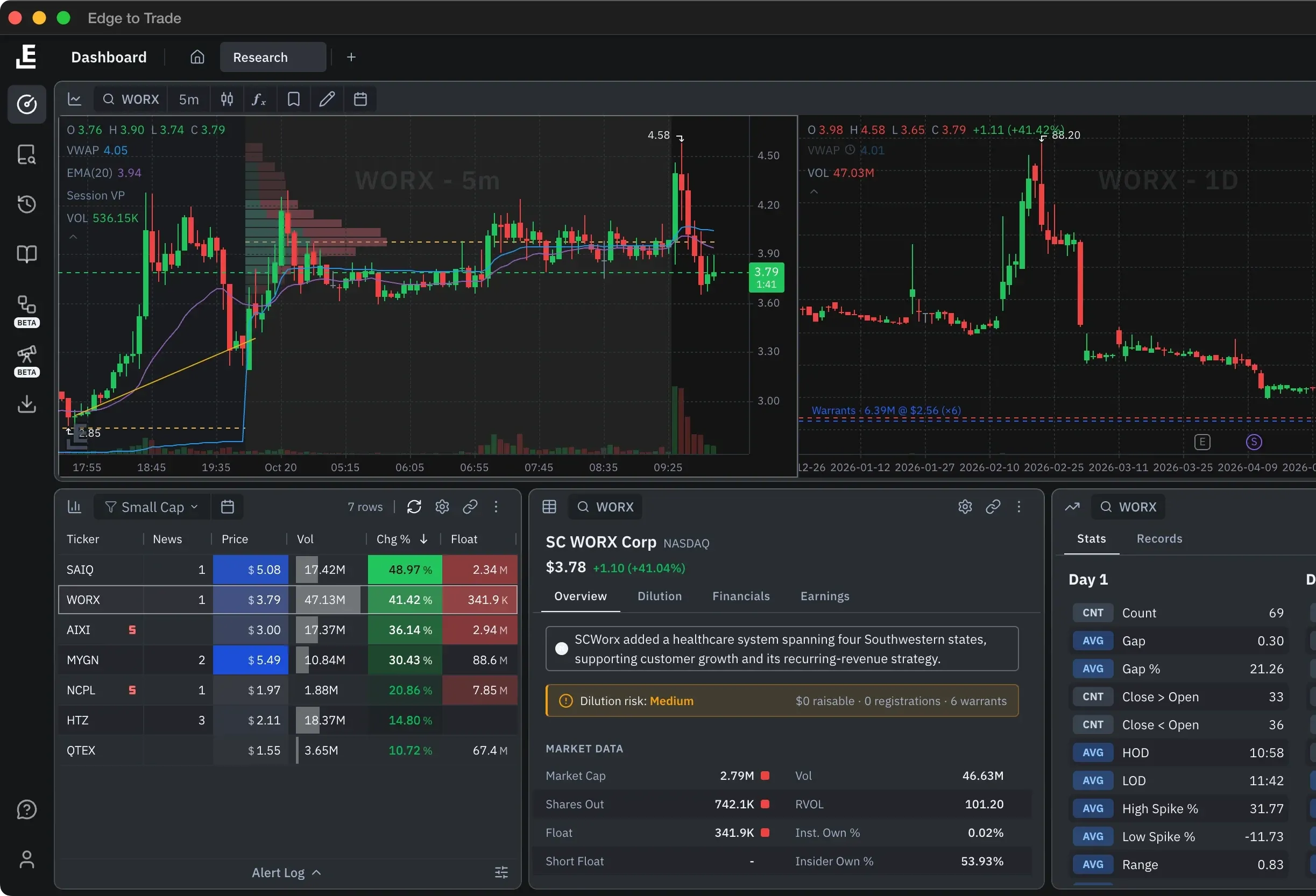
The best defense against dilution is due diligence. Before entering any small-cap position, check the full share structure: authorized shares, outstanding shares, float, outstanding warrants, and convertible instruments. Edge to Trade aggregates all of this data from SEC filings so you can assess dilution risk in seconds.
Set alerts for new SEC filings on your positions. If a company files a new shelf registration or prospectus supplement, you want to know immediately - not the next morning when the damage is already done.