The Problem With Stale Data
Most free data providers update float information quarterly at best. In the small-cap space, where offerings and conversions can change the float overnight, trading on stale data is like driving with a rearview mirror. You see where things were, not where they are.
We analyzed 2,400 trades across our user base over a six-month period and found that traders using unverified float data entered positions with materially incorrect share structure information 23% of the time.
Quantifying the Impact
Of those trades with incorrect data, the average loss attributable to the data discrepancy was $345 per trade. Across our user base, that adds up to an estimated $827K in preventable losses over six months.
The most common scenario: a trader identifies a low-float setup, enters a position, and then discovers post-entry that a recent offering has doubled the float. The expected supply-demand dynamics never materialize, and the trade fails.
How Our Verification Works
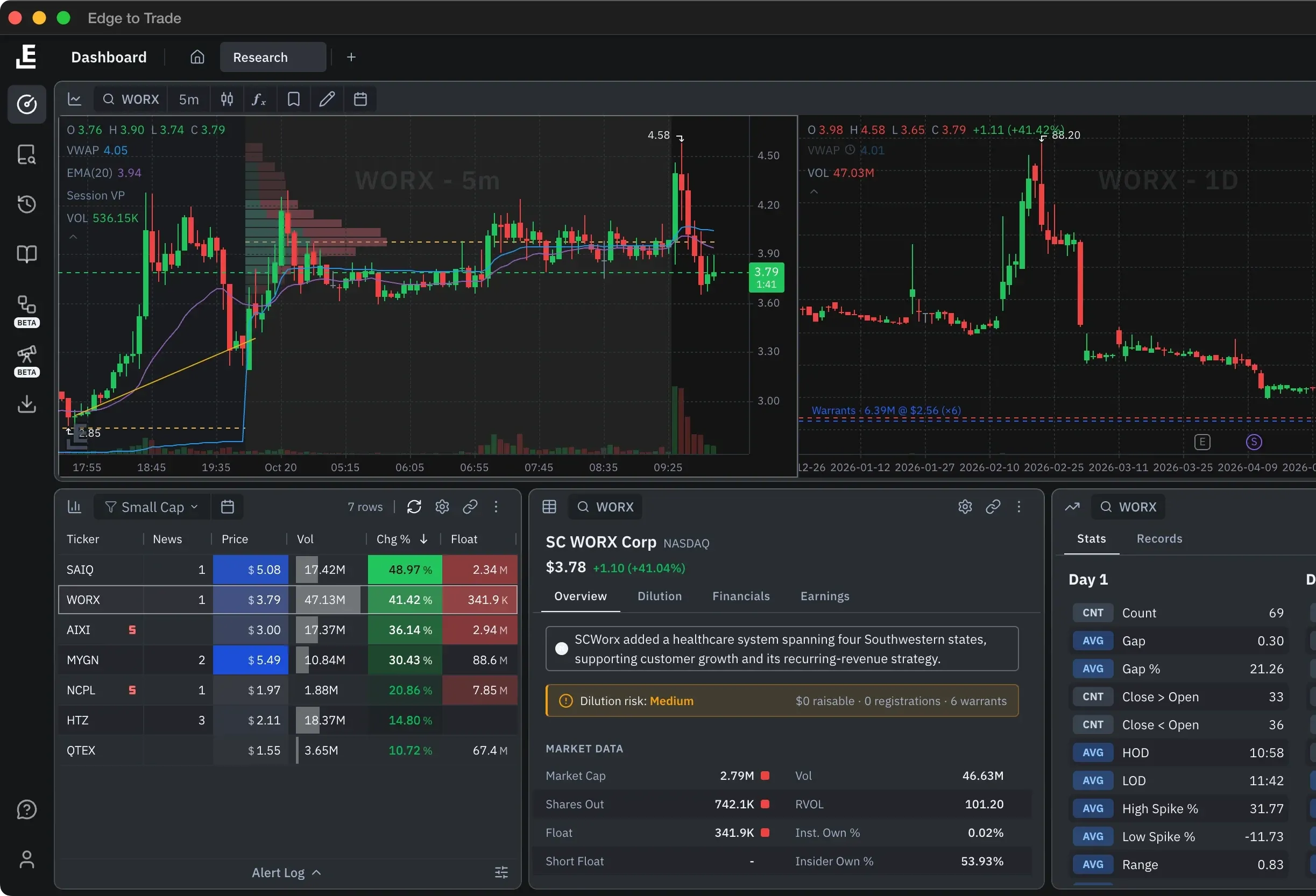
Every float figure on Edge to Trade is cross-referenced against SEC filings - 10-Ks, 10-Qs, S-1s, and prospectus supplements. Our system monitors EDGAR in real time and flags discrepancies within minutes of a new filing.
When a company files a prospectus supplement for a new offering, our users see the updated float before the market opens the next day. That's the edge that verified data provides.
Real Trader Stories
One of our users, a day trader based in Chicago, told us that our dilution alerts alone saved him from three separate trades that would have resulted in significant losses. In each case, an overnight offering changed the float by more than 50%, and he was able to adjust his thesis before the open.
Stories like these are why we built Edge to Trade. Accurate data isn't a luxury - it's a necessity for serious traders.