
Dilution (Stats & Scan)
Scanning
- All dilution metrics can be scanned and displayed as columns in the scanner, just like any other metric.
Columns
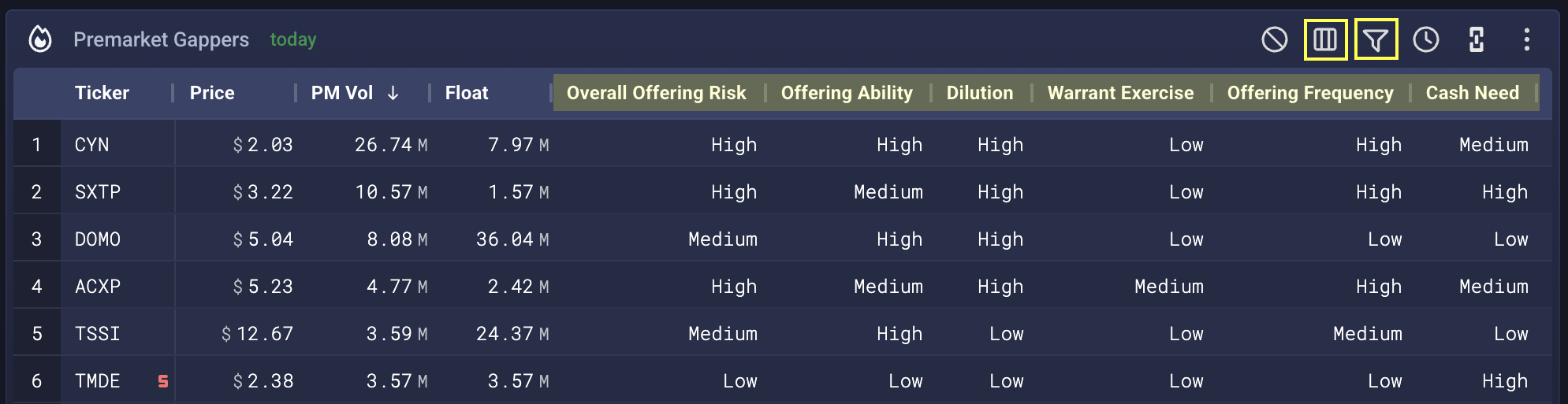
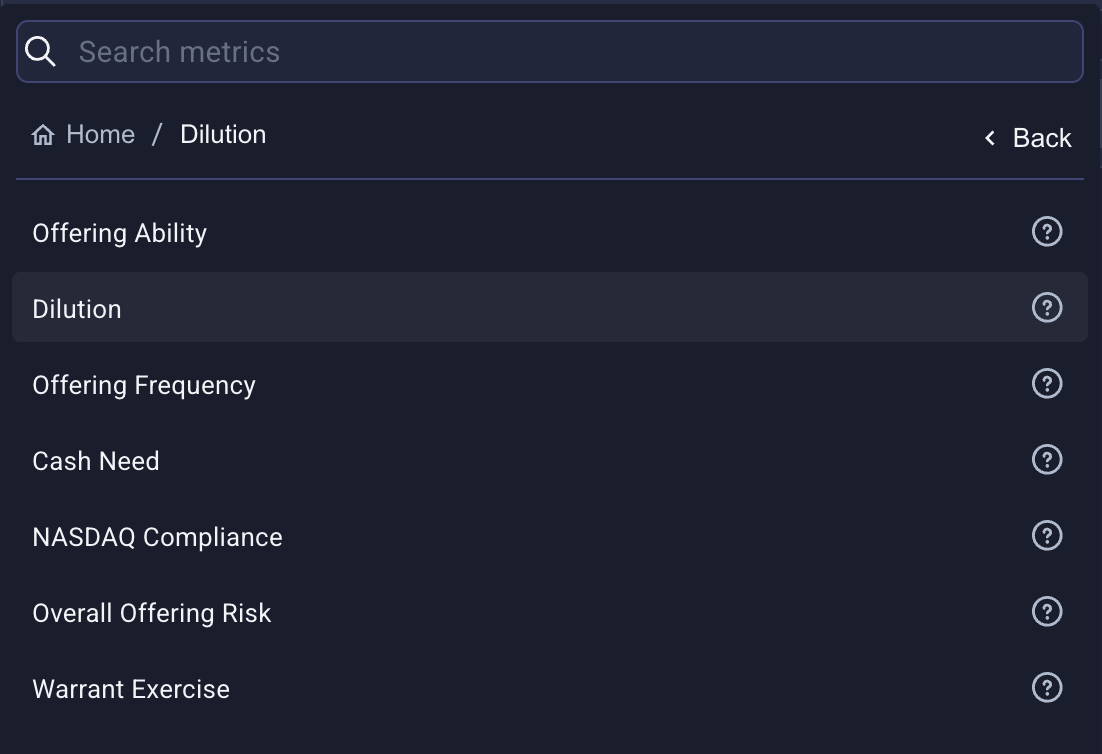
Filter Selections
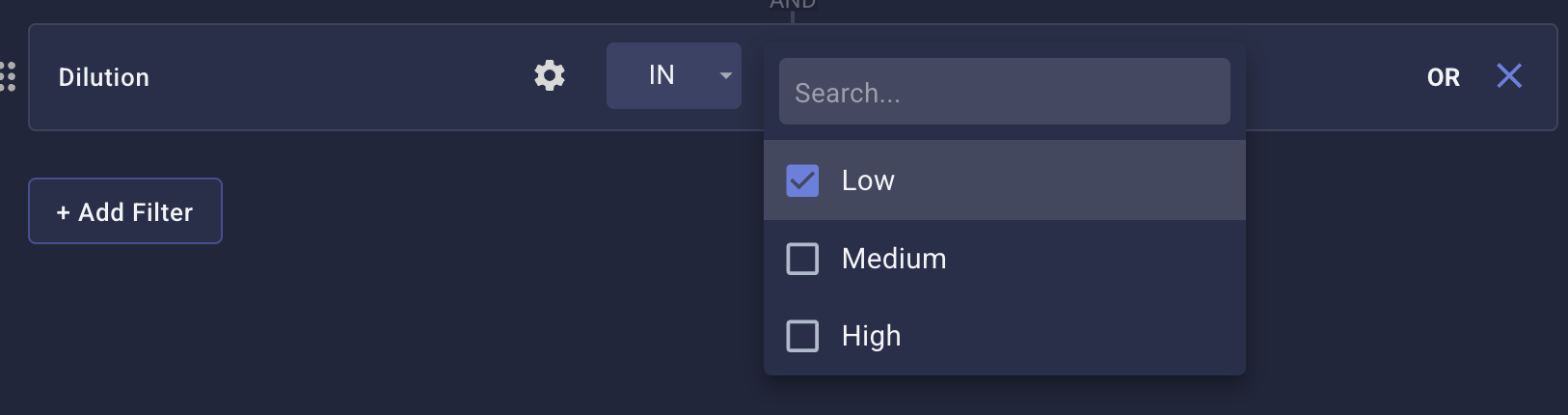
Filter Criteria
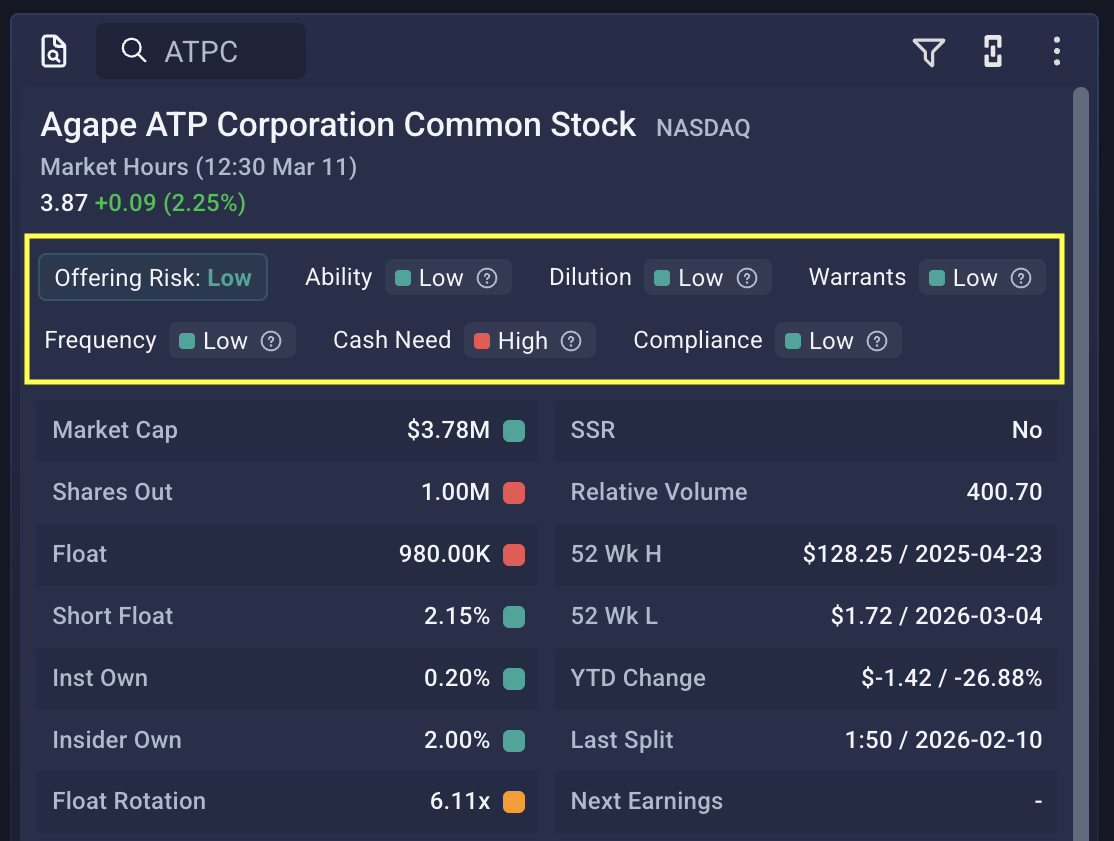
Stats
These stats are shown at the top of the Key Stats panel, alongside other ticker metrics.
On Honver Tool-Tip
- Discription
- Company specific information -> here ATPC
- How the Traffic light rating works
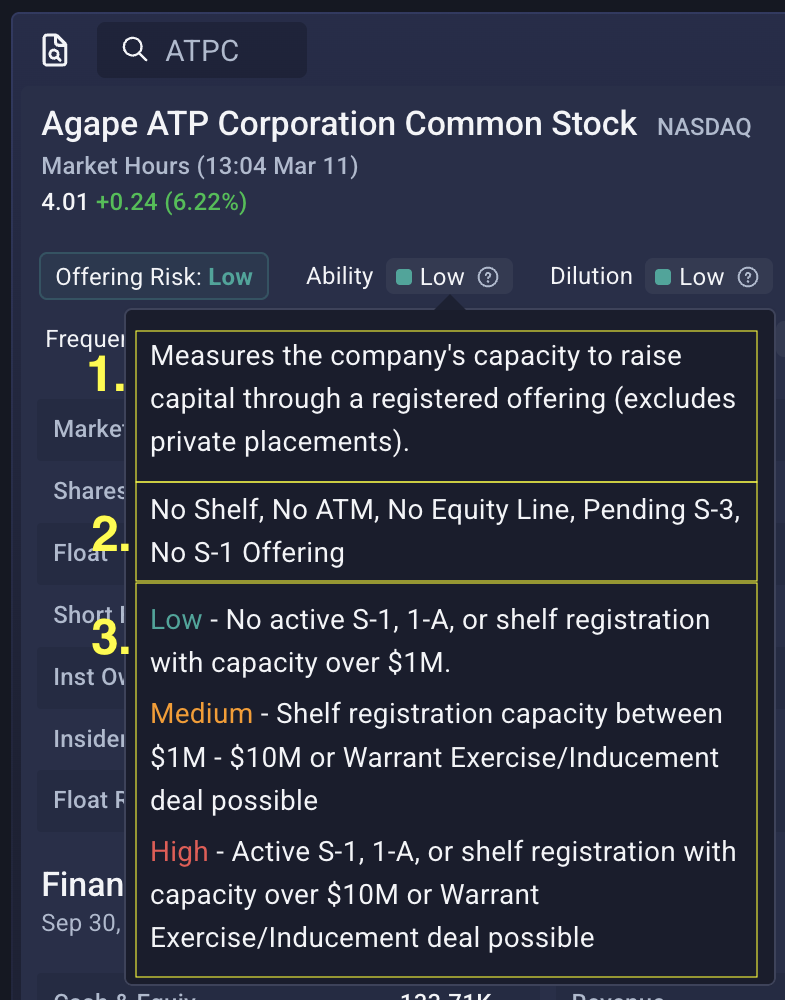
Ability
Measures the company's capacity to raise capital through a registered offering (excludes private placements).
Example: ATPC
No Shelf, No ATM, No Equity Line, Pending S-3, No S-1 Offering
| Risk | Condition |
|---|---|
| Low | No active S-1, 1-A, or shelf registration with capacity over $1M. |
| Medium | Shelf registration capacity between 10M or Warrant Exercise/Inducement deal possible. |
| High | Active S-1, 1-A, or shelf registration with capacity over $10M or Warrant Exercise/Inducement deal possible. |
Dilution
Assesses potential dilution relative to outstanding shares, factoring in warrants, convertibles (within 200% of the stock price or variable rate adjustments), and ATM capacity. Equity lines are excluded since beneficial ownership limits prevent major single-day impact, though they can pressure stock over time.
Example: ATPC
0.0%
| Risk | Condition |
|---|---|
| Low | Dilution is 20% or less of outstanding shares. |
| Medium | Dilution is between 20% - 50% of outstanding shares. |
| High | Dilution exceeds 50% of outstanding shares, indicating significant potential impact. |
Warrants
Evaluates the company's ability to raise capital by inducing warrant holders to exercise outstanding warrants. This looks at both the number of historical warrant inducements and the total dollar value those warrants could bring in at current stock prices. Only registered or pending-effect warrants are included.
Example: ATPC
Based on 0 Warrant Exercises and $0 Warrant Value
| Risk | Condition |
|---|---|
| Low | No historical warrant inducements. |
| Medium | At least one historical warrant inducement and current warrant exercise value is $2M or greater. |
| High | 2 or more historical warrant inducements and current warrant exercise value is $4M or greater. |
Frequency
Tracks how often the company conducts registered offerings or uses its ATM facility.
Example: ATPC
Count of offering types in last 2 yrs: Offerings: 0, Warrant Exercises: 0, PIPEs: 1, ATM Used: 0
| Risk | Condition |
|---|---|
| Low | 1 or fewer offerings/ATM usage in the past 2 years. |
| Medium | 2-3 offerings/ATM usage in the past 2 years. |
| High | 4 or more offerings/ATM usage in the past 2 years, suggesting frequent capital raises. |
Cash Need
Evaluates the company's operating cash flow and runway, estimating how long they can sustain operations without raising additional capital.
Example: ATPC
The company has -4.74 months of cash left based on quarterly cash burn of -1.16M.
| Risk | Condition |
|---|---|
| Low | Positive operating cash flow or more than 24 months of runway. |
| Medium | 6-24 months of runway before needing additional funds. |
| High | Less than 6 months of runway, indicating an urgent need for capital. |
Compliance
Tracks a company's compliance with Nasdaq listing requirements, specifically how long it has been since receiving a Nasdaq deficiency notice.
Example: ATPC
Agape ATP Corporation's most recent Nasdaq-related filing (filed February 5, 2026) notes that its stock traded at 1.00 minimum bid price requirement. The company plans to appeal the potential delisting by requesting a hearing by February 9, 2026, as disclosed in the February 5, 2026 filing.
| Risk | Condition |
|---|---|
| Low | No compliance issues or less than 3 months since the company received a Nasdaq notice. |
| Medium | 3-9 months since the Nasdaq compliance notice, meaning the company is still within a typical grace period. |
| High | Over 9 months since the initial Nasdaq compliance notice, which may indicate an increased risk of delisting. |